
Health & Wellness
Buying a Massage Chair for Your Parents: What Matters at 60+
The chair a parent actually uses is rarely the one with the most programs. It is the one they can get out of without thinking about it.
· NexGen Wellness · 6 min read
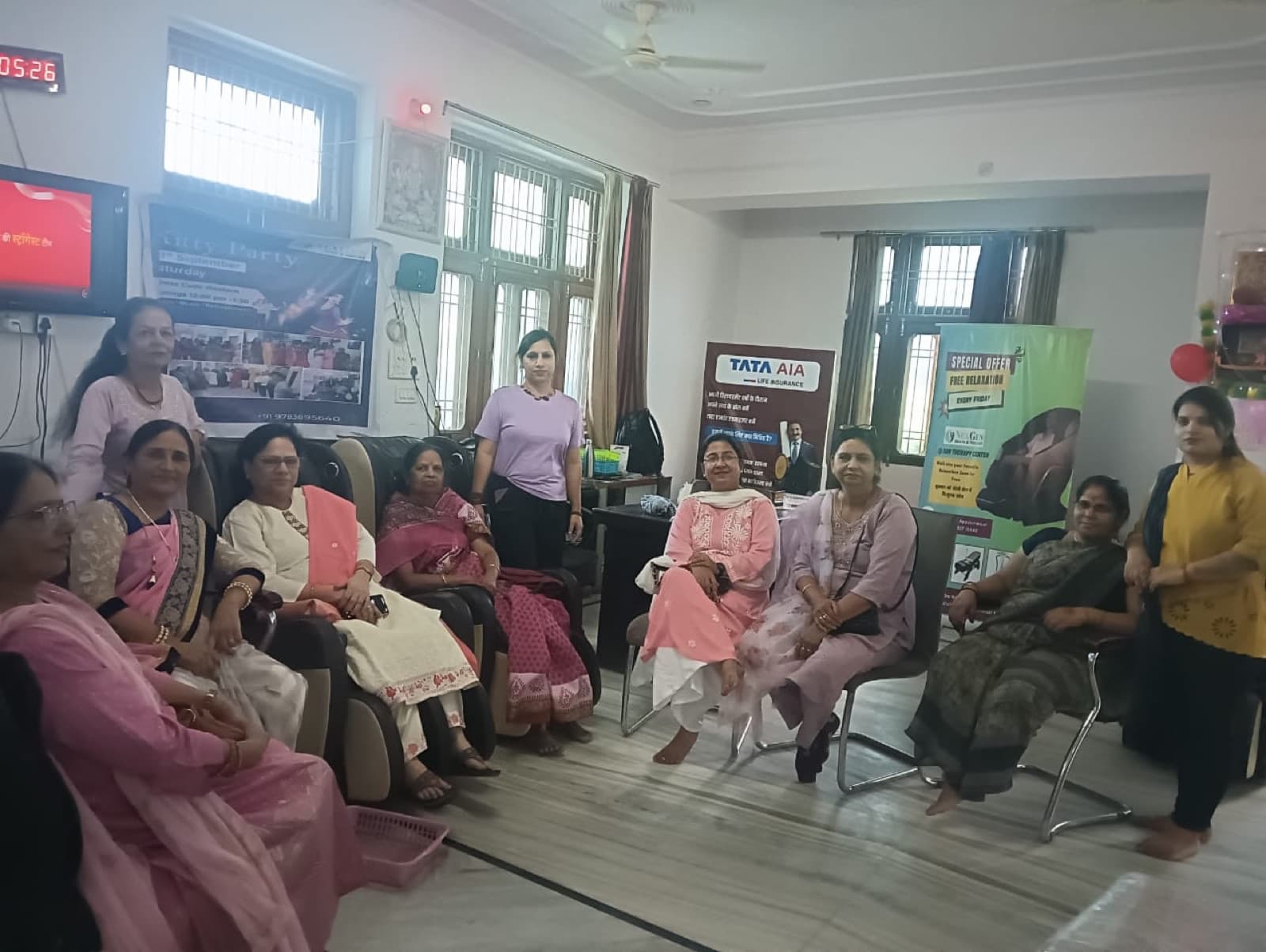
Getting in and out decides everything else
Most people shop for their parents the way they would shop for themselves. They compare mechanisms, count programs, and read about track length. Then the chair arrives, and the thing that decides whether it gets used twice a day or twice a month turns out to be something nobody measured: whether the person can sit down and stand up again on their own.
A massage chair is a deep seat. It reclines further than an armchair, the seat base is lower than a dining chair, and the arm rests are wide and padded rather than firm. All of that is comfortable to sink into and harder to push out of. If your mother needs a hand to get up, she will wait for someone to be home, and waiting is how a chair stops being used.
So test the exit, not just the massage. Have the actual user recline fully, run a program, bring the chair back upright with one button, and stand. If that takes two attempts or a pulled arm, that chair is the wrong chair, however good the rollers are.
The best chair for an older parent is the one they can leave without asking anyone for help.
Intensity is a ceiling, not a target
There is a habit in this category of treating power as the headline. For a 35-year-old with a desk-job back, a deeper setting is usually the point. For a 70-year-old it is a limit you stay well below.
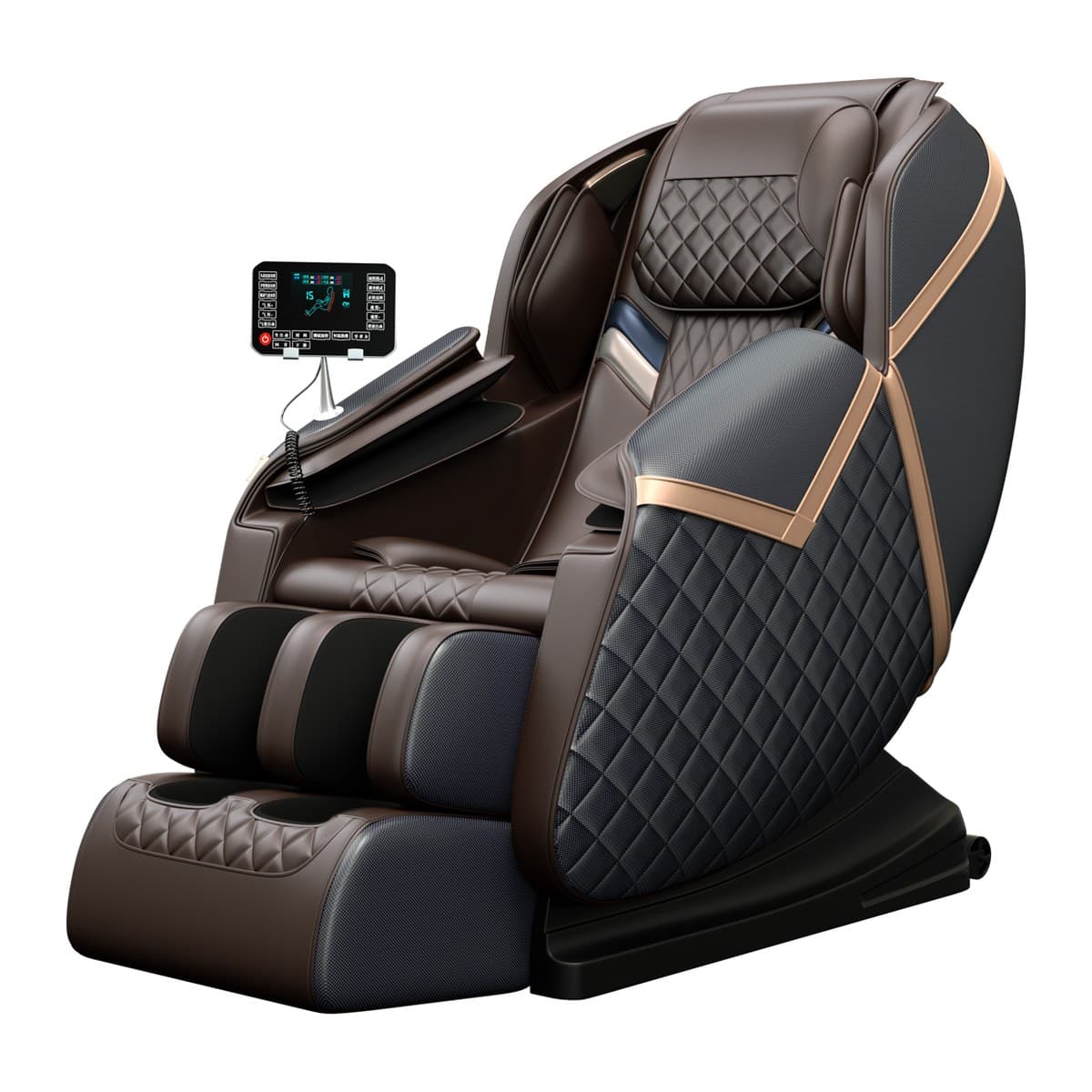
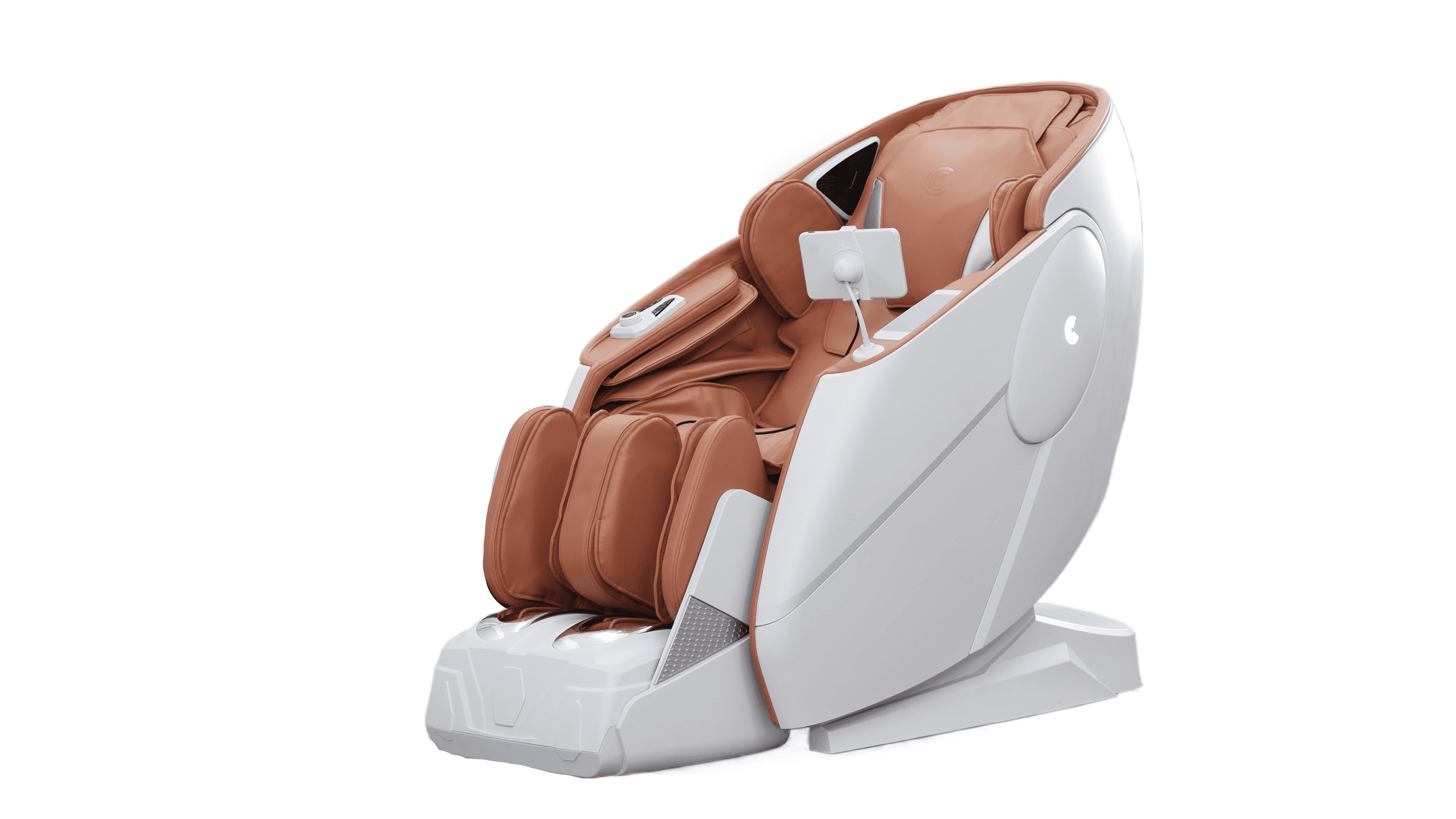
This is the real argument for a 4D chair rather than a cheaper fixed-depth one, and it is the opposite of the argument the brochures make. A 4D mechanism lets you dial the roller depth, speed and rhythm down as well as up. A 2D chair has one pressure, and if that pressure is too much for the person sitting in it, there is nothing to adjust. Our Z91 Plus runs a 4D double-push mechanism across 20 to 24 automatic programs, which in practice means finding one gentle program that suits them and leaving the chair on it.
Start at the lowest setting on the first session and keep it short. Many people find a light, regular session helps more with everyday stiffness than an occasional heavy one, and older skin and joints have less margin for a setting that turns out to be too much.
The foot massager is often the better first purchase
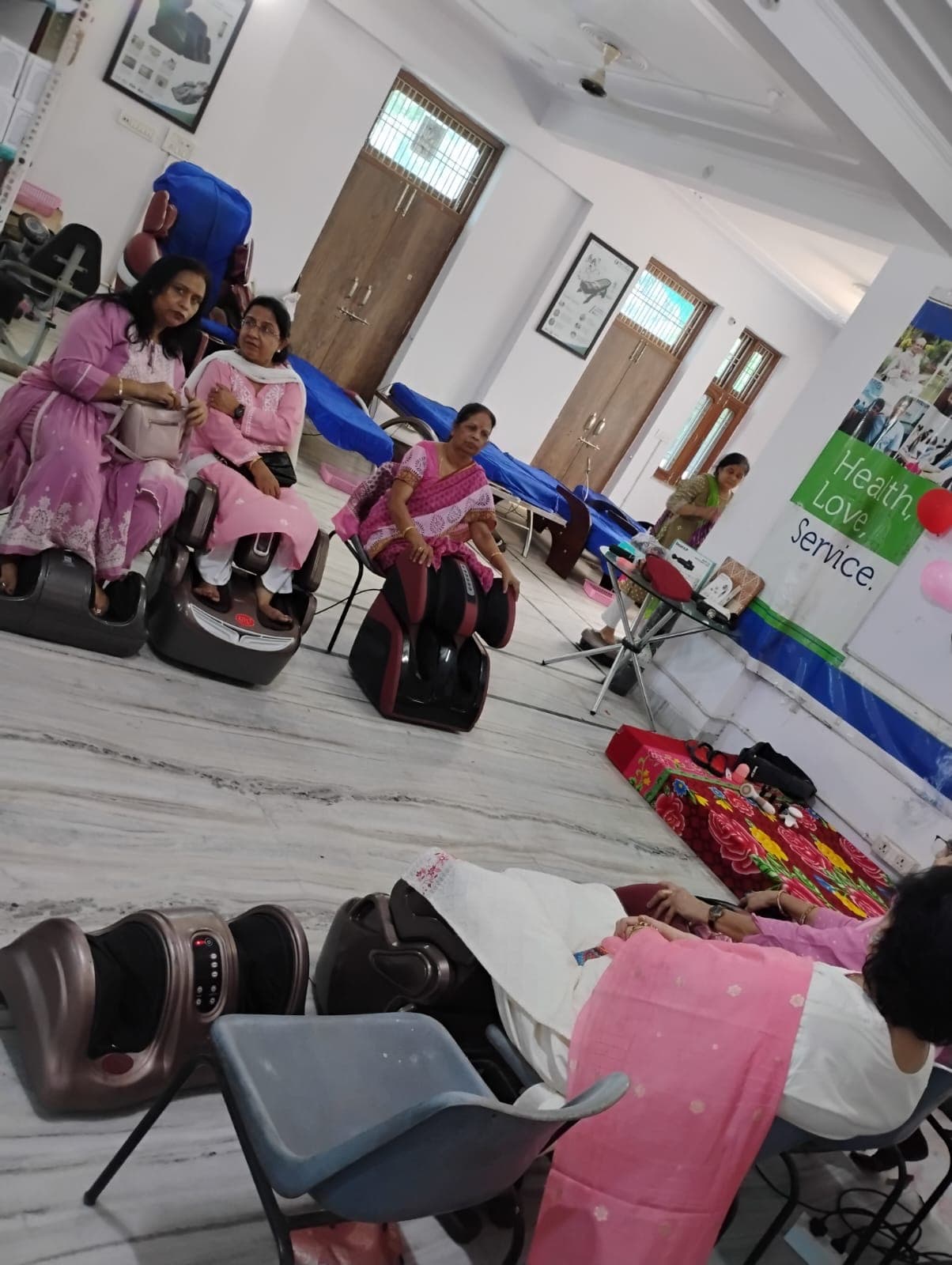
We say this to families in the showroom fairly often, sometimes against our own immediate interest. If the person you are buying for is unsteady on their feet, sleeps in a recliner they already like, or simply does not want a large new object in the living room, start with the legs.
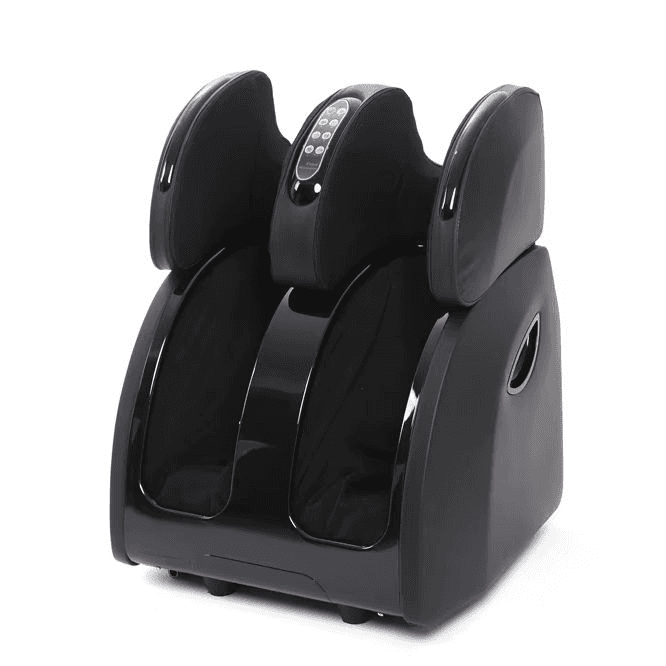
A foot and leg unit sits in front of the chair they already sit in. There is no transfer, no recline, and nothing to get out of. Our Classic Plus works the soles, ankles and calves with shiatsu rollers plus tapping, shaking and vibration, adds heat up to 50°C, and tilts up to 90° so it matches an upright chair or a reclined sofa. The controls are a panel on the unit itself, so there is no app and no screen to learn.
It is also a smaller commitment in every sense. At 20.5 kg it can be moved between rooms by one person. If it gets used daily for six months, you have learned something useful about whether a full chair is worth the space.
| For an older user | Full massage chair | Leg and foot massager |
|---|---|---|
| Getting in and out | Deep seat, full recline, needs steady legs | Stays in their own chair |
| Coverage | Neck, back, hips, arms, legs, feet | Soles, ankles and calves only |
| Controls | Touch screen or remote, several programs | One panel on the unit |
| Space | Permanent spot in a main room | Slides under a side table |
| Moving it later | Over 100 kg, plan the position once | 20.5 kg, one person can shift it |
Controls they will use without calling you
A chair with 24 programs has 23 that your father will never open. That is fine, and it is not an argument against the chair. It is an argument for setting it up properly on day one.
Pick one program with them, at an intensity they like, and show them the two controls that matter: start, and return to upright. Write those two on a card if that helps. The Z91 Plus has a 7-inch touch screen with voice control, which some older users take to immediately and others ignore entirely, so find out which before you assume. What you are looking for is a chair they can operate without a phone call, not one that demonstrates well.
Where it goes decides whether it is used
A massage chair in a spare bedroom gets used during the first month and then stops. A chair in the room where the family already sits gets used every evening. This matters more for older parents than for anyone else, because the trip to a far room is itself a reason not to bother.
Space is usually the objection, and it is a fair one in a Jaipur flat. Wall-hugging designs are the answer: the Z91 Plus slides forward as it reclines, so it needs about 5 cm of clearance behind it rather than the half metre older chairs wanted. It is 163 cm tall upright and weighs 106 kg, which means the position you choose on delivery day is effectively the position it keeps. Decide it before the chair arrives, not after.
- Put it where they already sit in the evening, not in a room reserved for it
- Leave clear floor on the side they will get out from
- Keep a plug point within reach so nobody runs a cable across a walkway
- Check the recline path clears the wall, curtains and any side table
What to check on the demo
Bring the person the chair is for. This sounds obvious and is the single most common thing families skip, usually because it is meant to be a surprise. A surprise is a nice idea that leaves you guessing on every point above.
- They sit down and stand up unaided, twice, after a full recline
- They can reach and press start and the upright button without leaning forward
- The lowest intensity is genuinely gentle, not just less strong
- The leg rest position suits their height with the footrest closed
- Heat on the lower back and calves feels warm rather than hot
- They can tell you which program they liked when the demo is over
Take a tape measure to the showroom with the dimensions of the spot the chair will go in, including the wall clearance the recline needs. Answering the placement question on the same trip saves a second one.
When to ask a doctor first
We are not qualified to clear anyone medically and neither is any seller who tells you otherwise. A massage chair is a comfort appliance, not a treatment, and there are conditions where a doctor should have an opinion before the first session.
- Osteoporosis, a recent fracture, or a spinal condition under treatment
- A pacemaker or any implanted device
- Recent surgery, or a hernia
- Deep vein thrombosis, varicose veins, or a known clotting disorder
- Uncontrolled blood pressure or a recent cardiac event
- Diabetic neuropathy, where reduced sensation makes heat harder to judge
None of these is automatically a no. They are reasons to ask a specific question of someone who knows the patient, and to keep the first few sessions short and light either way.
Frequently asked
- Is a massage chair safe for elderly people?
- For most healthy older adults, short sessions at a low intensity are generally well tolerated, and many people find regular use helps with everyday stiffness. Safety depends on the individual rather than on age alone, so check with a doctor first where there is osteoporosis, a pacemaker, recent surgery, a clotting disorder or uncontrolled blood pressure.
- Should I buy a massage chair or a foot massager for my parents?
- Start with a leg and foot massager if the person is unsteady getting out of a deep seat, is attached to the chair they already use, or does not want a large appliance in the living room. Choose a full chair if they want neck, back and hip coverage as well and can sit down and stand up from a fully reclined position on their own.
- What massage intensity should an older person use?
- Begin at the lowest setting for about ten minutes and increase only if it feels too light. A 4D chair is easier to get right than a fixed-depth one because the roller depth, speed and rhythm can all be reduced, not just raised. Regular gentle sessions suit most older users better than occasional strong ones.
- Can a massage chair help with knee or leg pain in old age?
- Massage chairs work on muscle rather than joints, so they do not treat a knee problem. Many people do find that warmth and calf compression ease the tiredness and tightness around the joint. For a diagnosed knee condition, ask the treating doctor before starting, and keep the leg airbags on a low setting.